

When Not to Surf
The hardest decision in surfing isn't paddling out. Sometimes it's deciding not to.
One of the biggest misconceptions about surfing is that every day with waves is a day you should be in the water. It isn't. One of the most valuable skills you'll ever develop as a surfer is knowing when to stay on the beach.
The ocean isn't going anywhere. There will always be another swell, another sunrise, and another good session. Knowing your limits isn't weakness—it's wisdom.
When the Waves Are Beyond Your Ability
There's nothing wrong with challenging yourself. In fact, that's how you improve.
If you're comfortable in chest-high surf, maybe it's time to try waves that are a couple of feet bigger. That's a natural progression.
But there's a difference between stretching your comfort zone and throwing yourself into conditions you're completely unprepared for.
Big waves require more than courage. They often require:
- Different equipment.
- Better paddling endurance.
- Stronger swimming ability.
- Better wave judgment.
- The mental ability to stay calm during long hold-downs.
If you're jumping from four-foot surf to twelve-foot surf, the issue isn't just confidence. It could be that your board isn't right, your body isn't ready, or your experience hasn't caught up yet.
Build your way there. The ocean will still be waiting.
Sometimes the Ocean Makes the Decision for You
I remember one day on the south shore of Oʻahu when the forecast was four to six feet Hawaiian.
A friend and I decided to surf a spot where no one else was out. The reason became obvious almost immediately. Every set was closing out, and the sections were nearly impossible to make.
My friend wanted to bring his girlfriend with us. I told him no.
She wasn't happy with me, but I wasn't trying to ruin anyone's day—I was thinking about her safety.
A paddle-out that normally takes fifteen to twenty minutes took us forty-five minutes. The current pulled us far to the left of where we started, and by the time we reached the lineup we were already exhausted.
That day reminded me that sometimes an empty lineup isn't a hidden gem.
Sometimes it's empty because everyone else has already made the smart decision.
When You See a Shark
I've seen sharks while surfing more than once.
I once watched a tiger shark around ten to twelve feet long swim only a few feet away from me while surfing Crouching Lion on Oʻahu's east side.
Another time I saw a six- to eight-foot hammerhead while surfing Shark Country.
Neither shark acted aggressively. They were simply passing through.
I stayed in the water both times, but looking back, the safest advice is simple:
If you see a shark, get out of the water.
Most sharks are not interested in people, but surfing is supposed to be enjoyable. There is no wave worth taking unnecessary risks.
After Heavy Rain
Brown water should always make you think twice.
Here in Hawaiʻi, heavy rain sends runoff from the mountains straight into the ocean.
That runoff can carry:
- debris,
- logs,
- trash,
- sediment,
- and bacteria.
It also reduces visibility, making it harder for marine life—and for you—to see what's around.
If the water is brown and dirty, consider waiting another day or finding a break that's away from the runoff.
When You're Injured
Surfers hate sitting on the beach.
We've all convinced ourselves:
"It's just my shoulder."
"My knee isn't that bad."
"I'll only catch a few."
Sometimes the smartest session is the one you skip.
An injury doesn't just affect your surfing.
Ask yourself:
- Can I paddle hard enough to get through a set?
- If I lose my board, can I swim back to shore?
- Can I duck dive or turtle roll without making the injury worse?
- Can I get out of someone else's way if things go wrong?
If the answer is no, today probably isn't the day.
When the Lineup Isn't Worth the Stress
Not every reason to stay out of the water has to do with the ocean.
Sometimes it's the people.
Every surf break has its own culture, and every lineup has its own pecking order. Here in Hawaiʻi, that pecking order is usually established pretty quickly. Most of the time, it works itself out naturally, but every now and then you'll paddle out into a lineup where the atmosphere just feels different.
Sometimes the most aggressive surfers—not necessarily the best surfers—are controlling every wave.
People are dropping in.
Back paddling.
Arguing.
Turning every set into a competition.
Could you paddle harder? Maybe.
Could you fight for waves? Probably.
But ask yourself why.
If surfing starts feeling more like a contest than something you enjoy, it may be time to paddle in.
There's nothing wrong with taking a break, grabbing some water, watching the lineup for a while, and coming back later. Sometimes the crowd changes completely in thirty minutes. Other times, the best decision is to check another spot or simply call it a day.
One wave isn't worth getting into an argument over.
One session isn't worth risking an injury.
The ocean will still be there tomorrow.
One of the biggest lessons surfing teaches isn't how to compete with other surfers—it's learning when to walk away from situations that aren't worth your energy.
When Your Instincts Tell You Something Isn't Right
This one is harder to explain.
Sometimes you arrive at the beach and something just feels off.
Maybe it's the size.
Maybe it's the current.
Maybe it's the crowd.
Maybe it's simply a feeling you can't explain.
I've learned not to ignore that feeling.
Your instincts are often built from years of quietly noticing things your conscious mind hasn't fully processed yet.
Listening to them has probably kept more surfers safe than they'll ever realize.
There Will Always Be Another Wave
The ocean doesn't care how badly you wanted to surf that day.
Missing one session won't make you a worse surfer.
Getting hurt—or putting yourself in a situation you weren't ready for—might keep you out of the water for months.
One of the biggest lessons surfing teaches isn't how to ride waves.
It's learning when to let one go.
Sometimes, the best surfers on the beach are the ones who never paddle out.
Daniel Sole
Founder, Sole Surf Company
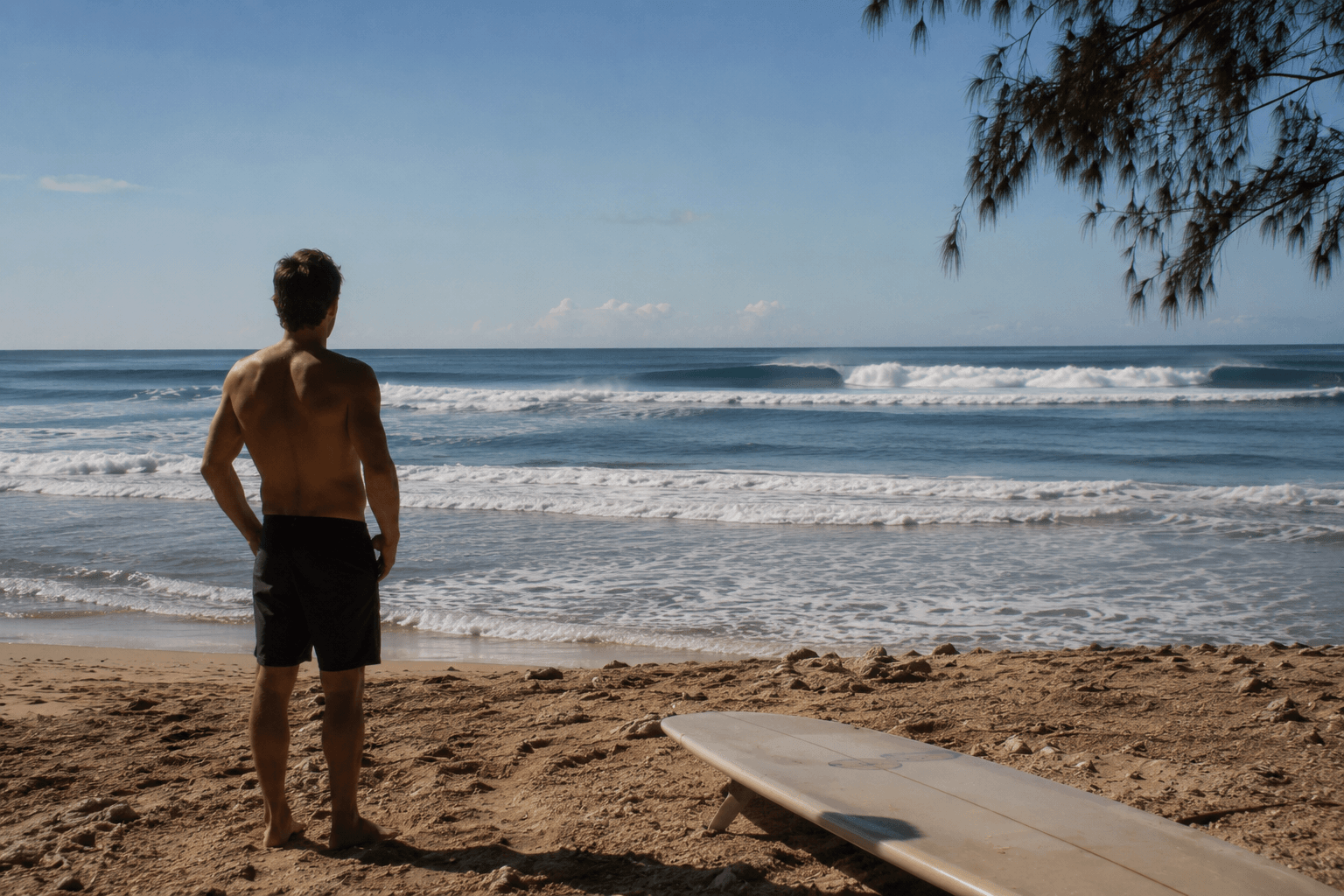
Image Note: The featured image was generated using AI.

Hinterlasse einen Kommentar
Diese Website ist durch hCaptcha geschützt und es gelten die allgemeinen Geschäftsbedingungen und Datenschutzbestimmungen von hCaptcha.