
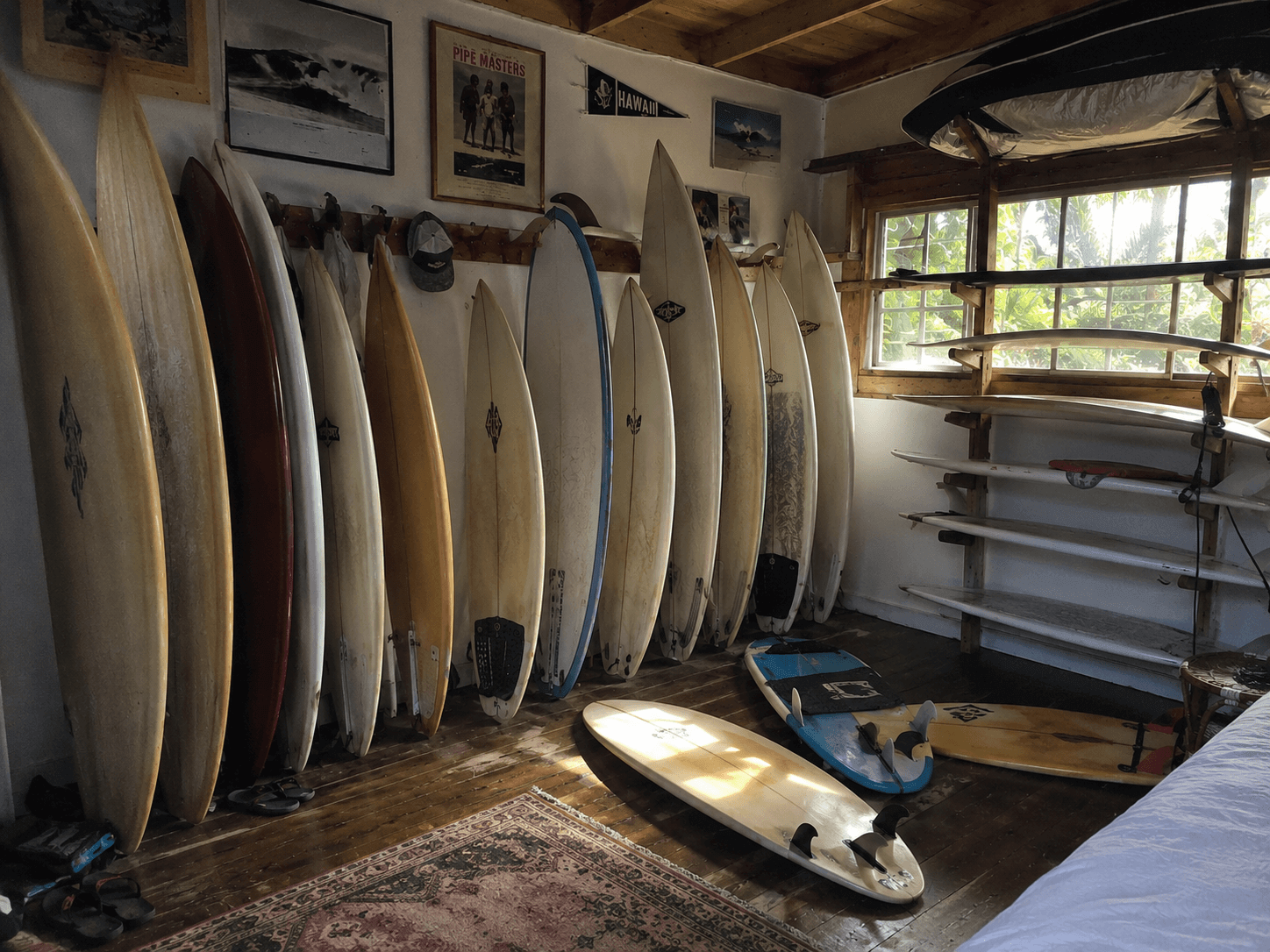
なぜサーフボードは一枚だけでは足りないのか(いずれは)
新しいサーファーがよく犯す最大の間違いの一つは、上達するためにガレージいっぱいのサーフボードが必要だと信じることです。
必要ありません。
実際、最初のうちは一つのボードで十分です。
コストコのフォームボードでも、ガレージセールの中古ロングボードでも、Facebookマーケットプレイスの中古品でも、地元のサーフショップの中古ボードでも、目標はシンプルです—水に入ってサーフィンすること。
初心者にいつも伝えるアドバイスの一つはこれです:
ほとんどの人にとって、新品のサーフボードを買う必要はありません。
ボードは傷つきます。駐車場で引きずったり、車にぶつけたり、最終的にはダメージを受けます。それは学びの一部です。自分がどんなサーファーになりたいか分かるまではお金を節約しましょう。
もっと重要なのは、同じボードで何度もサーフィンすることです。そのボードの得意なことを学び、苦手なことを知ること。一つのボードは、異なる形のボードを次々に使うよりもはるかに多くを教えてくれます。
最初のボードが十分でなくなる日
サーフィンが上達すると、興味深いことが起こり始めます。
ウエストハイの波で素晴らしいと感じたボードが、オーバーヘッドの波になると遅く感じます。
次の小さい波の日には、高性能ショートボードが水に引っかかっているように感じます。
どちらのボードにも問題はありません。
ボードは単に設計された用途以外の仕事を求められているだけです。
それがクイバーが増え始める時です—サーファーがボードを買うのが好きだからではなく、異なる波が異なる装備を必要とするからです。
私が今までに受けた最高のアドバイス
数年前、とても有名なサーフボードシェイパーと話す機会がありました。
彼は私に一つのシンプルなアドバイスをくれ、それは今でも心に残っています。
「ボードの長さの間に約4インチの差を保つようにしなさい。」
厳格なルールとして意図されたものではありません。
次のボードと重複しないように、すべてのボードに明確な目的を持たせるためのガイドラインでした。
振り返ると、そのアドバイスは私にとって非常に役立ちました。
私のクイバー
サーファーそれぞれのクイバーは異なりますが、これが私が長年使ってきたものです。
-
膝くらいの波や弱い波の日用にロングボード。
-
ウエストからショルダーの波用に5'8"のフィッシュ。
-
ショルダーからダブルオーバーヘッド直前までの波用に6'2"のショートボード。
-
ダブルオーバーヘッドのサーフィン用に6'6"のステップアップ。
-
若い頃は、トリプルオーバーヘッドの日やそれ以上のために7'2"と7'8"のボードも持っていました。
正直に言うと、小さいボードの方が大きいボードよりもおそらく10倍多く水に触れていました。
ほとんどの人は、巨大な波よりも平均的な波でサーフィンする時間の方がはるかに長いです。
ボリュームがすべてではない
今日、サーファーが最初に見る数字の一つはボリュームです。
その理由は理解しています。
それは非常に役立つ測定値です。
しかし何年も前は、ボリュームはあまり話題になりませんでした。私たちはボードを寸法、レール、ロッカー、アウトライン、テール形状で選んでいました。もしかしたらそれは単なるノスタルジアかもしれませんが、数字を追いかけるだけでなく、なぜボードが機能するのかを少し考えさせられたと思います。
とはいえ、情報が多いことは通常良いことです。ボリュームはサーファーがより良い判断を下すのに役立つもう一つのツールです。ただし、それだけが全てではありません。
私の小波用ボード
これを書いている今、私は約6'1"で190ポンドです。
私の小波用ボードは5'8"のフィッシュで、フラットなロッカー、フルなレール、まっすぐなアウトライン、広いスワローテール、約36.5リットルのボリュームがあります。
私にとっては、膝くらいの高さからショルダーハイまで、特に波が少し弱いときに完璧です。
余分なボリュームがパドリングを楽にします。
フラットなロッカーとまっすぐなアウトラインは、ほとんど努力せずにスピードを生み出します。
フルなレールは寛容で、完璧なテクニックを要求せずにターン中のスピードを維持します。
スワローテールはテールの表面積を少し減らし、ターン中にスムーズにリリースしながらスピードを維持するのに役立ちます。
全体的に、単に楽しいボードです。波が小さく遊び心があるときには、これに勝るものはありません。
もし一枚だけボードを残せるなら
もし一枚だけボードを持てるとしたらどれを選ぶかと聞かれたら。
私にとっての答えは6'2"のショートボードです。
ハワイに住んでいるので、実際にサーフィンする最も幅広いコンディションをカバーしています。ショルダーハイの波からダブルオーバーヘッド直前まで、最もよく手に取るボードです。
私のフィッシュと比べると、より狭く、約33.5リットルのボリュームがあり、明らかにロッカーが強く、テーパードレールで、ラウンドピンまたはサムテールのどちらかです。
これらすべてのデザインの選択は同じ目的に役立っています。
コントロールです。
狭いアウトラインはレールからレールへの移行がより速くなります。
追加されたロッカーは、ボードが波の急なセクションにフィットし、フラットなボードに比べて自然にスピードを落とします。
テーパードレールは波のフェイスにより積極的に食い込み、ボードを正確に置きたい場所に置くことができます。
ラウンドピン(またはサムテール)は水中でのホールド感を高め、パワフルでバレル状の波やタイトなトップからボトムへのサーフィンに最適です。
小さなサーフでは通常スピードを作り出そうとします。
パワフルなサーフではコントロールしようとします。
これら二つのボードの最大の違いの一つです。
私のフィッシュは今でも最も楽しいボードの一つですが、もし一枚だけボードを残せるなら、6'2"を選びます。ハワイで一年を通して出会う最も幅広いコンディションでサーフィンできるからです。
大きな波には大きな道具が必要です
サーフがダブルオーバーヘッドに達したら、6'6"のステップアップボードに乗り換えます。
フィロソフィーはあまり変わりません。
それは単に私のショートボードの大きいバージョンです。
余分な長さがあることで、より速くパドルでき、波に早く乗れて、大きなうねりのスピードに合わせやすくなります。
そのサイズでは、波に乗ることは立ってから何をするかと同じくらい重要です。
完璧なクイバーは存在しません
ここでサーフボードは非常に個人的なものになります。
あるサーファーはスクワッシュテールが大好きです。
また別の人は丸みを帯びたピンテール以外は乗りません。
ある人はパンチの効いたビーチブレイクでサーフィンします。
ある人は長いポイントブレイクやリーフブレイクで生涯を過ごします。
すべての波は異なる問いを投げかけ、すべてのサーファーはそれに少しずつ違う答えを返します。
サーフィンを続けるうちに、ロッカー、レール、アウトライン、テール、フィン、ボリュームのわずかな違いが、足元のボードの感触をまったく変えることに気づくでしょう。
それがサーフィンをやめられなくする理由の一つです。
常に新しいことを学び、試すべき別のボードがあり、攻略すべき別の波があります。
サーフィンを始めたばかりの頃、完璧なサーフボードを見つけたかったのです。
長年海に入ってきて、それが間違った質問だったと気づきました。
本当の目標は完璧なボードを見つけることではありません。
それはあなたの完璧なボードを見つけることです。
あなたがサーフィンする波に合うボード。
あなたが好きなターンの仕方。
あなたが楽しむスピード。
パドルアウトするたびに追い求める感覚。
それがSole Surf Companyという名前を選んだ理由の一つです。
「ソール」という名前の意味をよく聞かれます。
私にとっては、サーフィンには唯一の正しい方法があると言うことではありません。
それは逆のことです。
すべてのサーファーにはそれぞれの旅があります。
それぞれのお気に入りの波。
それぞれのお気に入りのボード。
それぞれのスタイル。
それぞれの答え。
2つとして同じクイバーはありません。なぜなら2人として同じサーファーはいないからです。
それが私がサーフィンで最も愛していることの一つです。
あなたのボードはゆっくりとあなたの経験、サーフィンした波、そしてあなた自身のサーファーとしての姿を映し出すようになります。
私のボードは確かにそうなりました。
最後に
この記事の目的は、4枚か5枚のサーフボードを買うよう説得することではありません。
初心者なら、1枚のボードで十分です。
主に腰から頭の高さの波でサーフィンするなら、2枚のボードでほとんどすべての波に対応できるでしょう。
あなたの技術が向上し、より多様なコンディションでサーフィンを始めると、クイバーは自然と増えていきます。誰かにそうすべきだと言われたからではなく、最終的にパドルアウトして波を見てこう思うからです。
「今日はあまりフィッシュの日じゃないな」
または…
「ステップアップボードを持ってくればよかったな」
やがて、どのボードが一番かを尋ねるのをやめます。
どのボードが今日に合っているかを考え始めます。
そしてその時、あなたのクイバー(サーフボードのコレクション)が単なるサーフボードの集まりではないことに気づくでしょう。
それはあなたのサーフィンの旅の物語です。
ダニエル・ソール
創設者、ソールサーフカンパニー
画像の注意事項: 特集画像はAIを使って生成されました。

コメントを書く
このサイトはhCaptchaによって保護されており、hCaptchaプライバシーポリシーおよび利用規約が適用されます。