
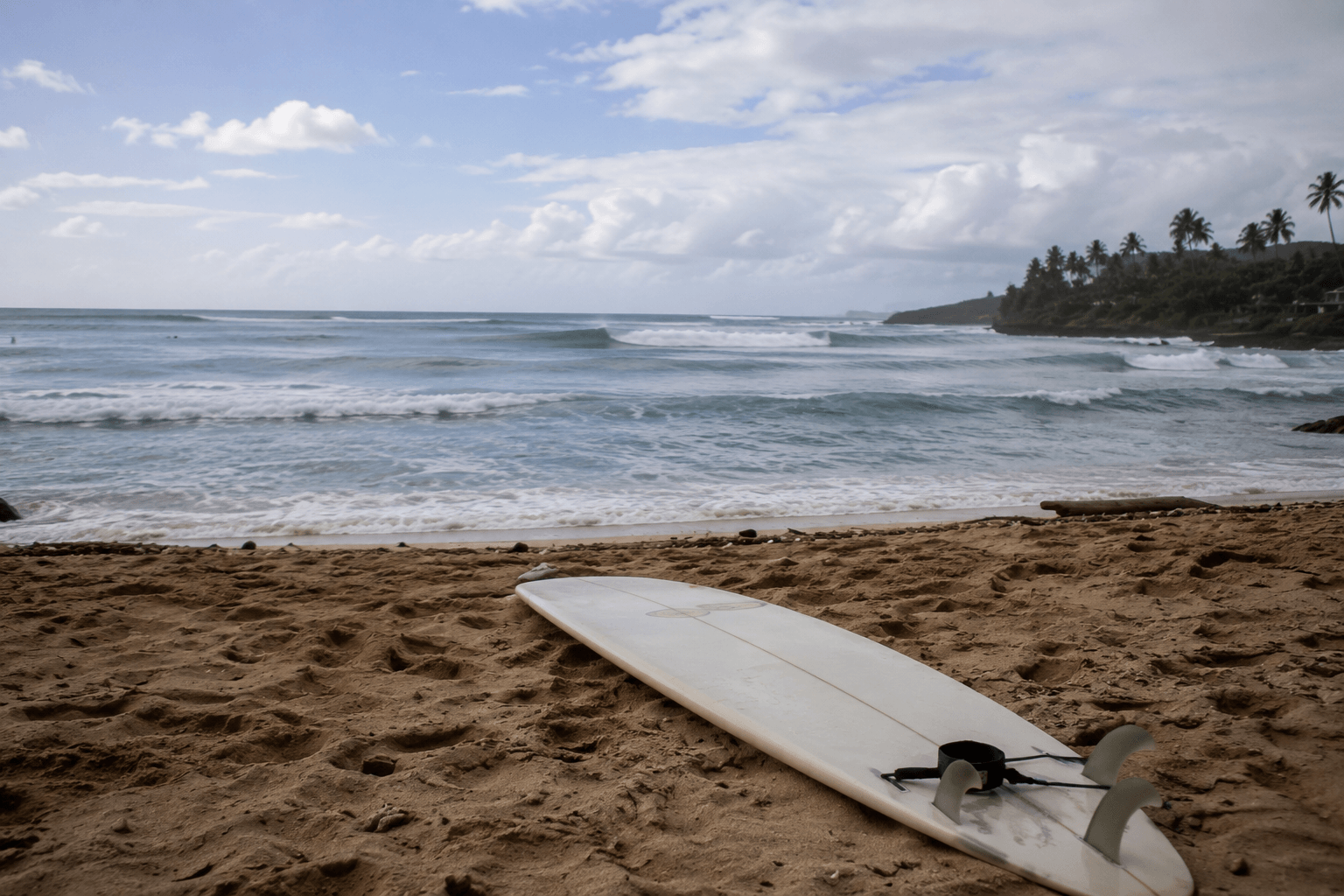
誰もサーフィンのやり方を教えてくれなかった
誰も私にサーフィンのやり方を教えてくれませんでした。
レッスンを受けたこともありません。
サーフィンのマナーやラインナップの読み方、水中でのポジションの取り方も誰も説明してくれませんでした。
すべては友人が彼と彼の父親と一緒にダイヤモンドヘッドでサーフィンに誘ってくれたことから始まりました。
私はサーフボードすら持っていませんでした。
彼の父親はどこかで見つけて修理した古いロングボードを持っていて、その日それを貸してくれました。
私たちはピークまでパドルで漕ぎ出しました。
波に乗りました。
立ち上がりました。
転びませんでした。
「もしかしたらサーフィンはみんなが言うほど難しくないかも」と思ったのを覚えています。
30年以上経った今振り返ると、それは大きな間違いでした。
その後すぐに、私はガレージセールで50ドルの初めてのサーフボードを買いました。
当時、私は毎週土曜日に教会の掃除をする庭師の仕事をしていて、月に約450ドル稼いでいました。50ドルは私にとって大金でしたが、それが精一杯でした。
ほとんどの人は初心者にはロングボードを勧めたでしょう。
でも私は欲しくありませんでした。
車に入らなさそうで、持ち運びも大変そうに見えたからです。だから代わりに中古の6フィート4インチのショートボードを買いました。
振り返ると、それはおそらく学びやすいボードではなかったでしょうが、私のものでした。
私と友人二人は、できる限り海兵隊基地ハワイのピラミッドロックでサーフィンを始めました。
風向き、うねりの周期、潮の満ち引き、天気予報については何も知りませんでした。
ただ海に行って波を見ていました。
スマートフォンやサーフィンアプリがなかった頃は、596-SURFに電話してサーフレポートを聞いていました。波があると言われたら、ボードを車に積んで海へ向かいました。
それが私たちのサーフ予報でした。
時間が経つにつれて、少しずつわかってきました。
波はたいてい朝早く、貿易風が強くなる前の方がきれいだと気づきました。誰にも教わらずに夜明けのパトロールを発見しました。ほとんどの人が起きる前の方がサーフィンが良いと気づいただけです。
ほとんどのことは試行錯誤で学びました。
乗れそうにない波にパドルを漕いでいました。
立ち上がるのが遅すぎました。
ノーズが沈みました。
内側に捕まってしまいました。
ひどく波に叩かれました。
そしてまたパドルで戻り、何が間違っていたのか考えました。
YouTubeの動画もありませんでした。
サーフスクールもありませんでした。
スローモーションのコーチングもありませんでした。
誰かが浜辺から撮影してくれることもありませんでした。
ただ友人たちと笑い合い、励まし合い、できるだけ長く海に入っているだけでした。
少しずつ、物事がわかり始めました。
どこに座るべきか学びました。
パドルを漕ぐことが立ち上がることと同じくらい重要だと学びました。
海を読むことは数日ではなく何年もかかる技術だと学びました。
何よりも、サーフィンは謙虚さを教えてくれることを学びました。
「わかった」と思った瞬間に、海はまだ自分が学生であることを思い出させてくれます。
30年以上経った今でも、私はそう感じています。
まだ学んでいます。
まだ失敗しています。
セッションの後にはいつも、「リーフの10ヤード先に座っていればよかった」とか「そのセットを待って、無理に前の波に乗らなければよかった」と思っています。
それは決してなくならないと思います。
今では、誰かがサーフィンを学びたいと思ったら、これまで以上に多くのリソースがあります。
YouTubeで世界クラスのコーチの映像を見ることができます。
オンラインでレッスンを予約できます。
家を出る前にスマホで天気予報を調べることができます。
それらは素晴らしいツールであり、初心者はぜひ活用すべきだと思います。
しかし、どんな動画やレッスン、アプリでも決して代わりにならないものが一つあります。
海で過ごす時間です。
サーフィンはいつも一つの波、一度のワイプアウト、一つの失敗から学ぶものです。
振り返ると、私はほとんどすべてを苦労して学んだのでしょう。
正直なところ…
何も変えたくありません。
ダニエル・ソール
ソールサーフカンパニー創設者
画像についての注意: 掲載画像はAIを使って生成されました。

コメントを書く
このサイトはhCaptchaによって保護されており、hCaptchaプライバシーポリシーおよび利用規約が適用されます。