Your First Surf Lesson: What to Expect
There is something special about your first time surfing. For a lot of people, it's the moment they fall in love with the ocean. It can also be frustrating, exhausting, and a little intimidating. The important thing is to understand that everyone starts the same way.
When I first tried surfing, I did what a lot of people do. I grabbed a longboard, paddled out, and tried to stand up. Was it possible? Sure. Was it the best way to learn? Probably not.
If I could go back and do it again, I would approach it differently.
Start With the Right Mindset
The most important thing you can bring to your first surf lesson isn't strength or balance—it's your attitude.
You're probably going to fall.
You're probably going to miss waves.
You might only stand up for a second before ending up back in the water.
That's completely normal.
Go into your first lesson expecting to laugh, make mistakes, and learn something new. Don't judge your success by how many waves you ride. Judge it by whether you had fun and left wanting to come back.
Surfing is a lifelong journey. Nobody becomes a surfer in one day, and that's part of what makes it so rewarding.
Consider Taking One or Two Lessons
I highly recommend taking one or two lessons before heading out on your own. A good instructor can teach you the fundamentals that would otherwise take months to figure out through trial and error.
You'll learn:
- Ocean safety.
- How to paddle efficiently.
- How to catch whitewater waves.
- How to stand up.
- Basic surf etiquette.
- How to stay safe around other surfers.
After a lesson or two, you'll have a solid foundation and enough confidence to begin practicing on your own.
Buy a Used Board
Once you've decided surfing is something you want to pursue, resist the temptation to buy a brand-new board.
Instead, look for a used soft-top or longboard on Facebook Marketplace, at a garage sale, a secondhand sporting goods store, or your local surf shop.
Your first board is going to get dinged, scratched, and dropped. That's part of learning. Save your money until you've developed your skills and know what type of surfing you enjoy most.
What You'll Probably Wear
Most surf schools will put you on a large soft-top board.
They're stable, forgiving, and perfect for beginners.
I'd recommend wearing:
- A rash guard.
- Board shorts (or a swimsuit you're comfortable moving in).
- Reef-safe sunscreen.
Soft-top boards are fantastic for learning, but they can rub against your chest, stomach, and thighs while paddling. That's called board rash. It's simply skin irritation caused by repeatedly rubbing against the board. A rash guard helps prevent this and makes your lesson much more comfortable.
Before You Ever Touch the Water
Before anyone paddles out, your instructor will usually gather everyone together for a quick safety briefing.
This is where you'll learn about:
- Ocean conditions.
- Currents.
- Wave direction.
- Where to safely enter and exit the water.
- The reef or any other hazards.
- What to do if you fall.
It might feel like you're eager to skip this part and get into the water, but pay attention. Understanding the ocean is just as important as learning how to stand up.
Practicing on the Sand
Before you paddle out, you'll spend some time practicing on the beach.
You'll lie on the board and learn where your body should be positioned.
You'll practice paddling.
Then you'll rehearse the pop-up—the movement from lying down to standing.
The goal isn't to stand up perfectly. The goal is to get to your feet quickly while staying low.
Keep your knees bent.
Look forward—not down at your feet.
If getting straight to your feet feels difficult, don't worry. Many beginners naturally come up onto one knee first before progressing to a full pop-up. That's perfectly okay. As your confidence grows, you'll begin popping up in one smooth movement.
Heading Into the Water
Eventually, it's time to paddle out.
The first thing you'll notice is that paddling is harder than it looks. Don't worry if your arms get tired—that happens to everyone. Like anything else in surfing, paddling becomes easier the more time you spend in the water.
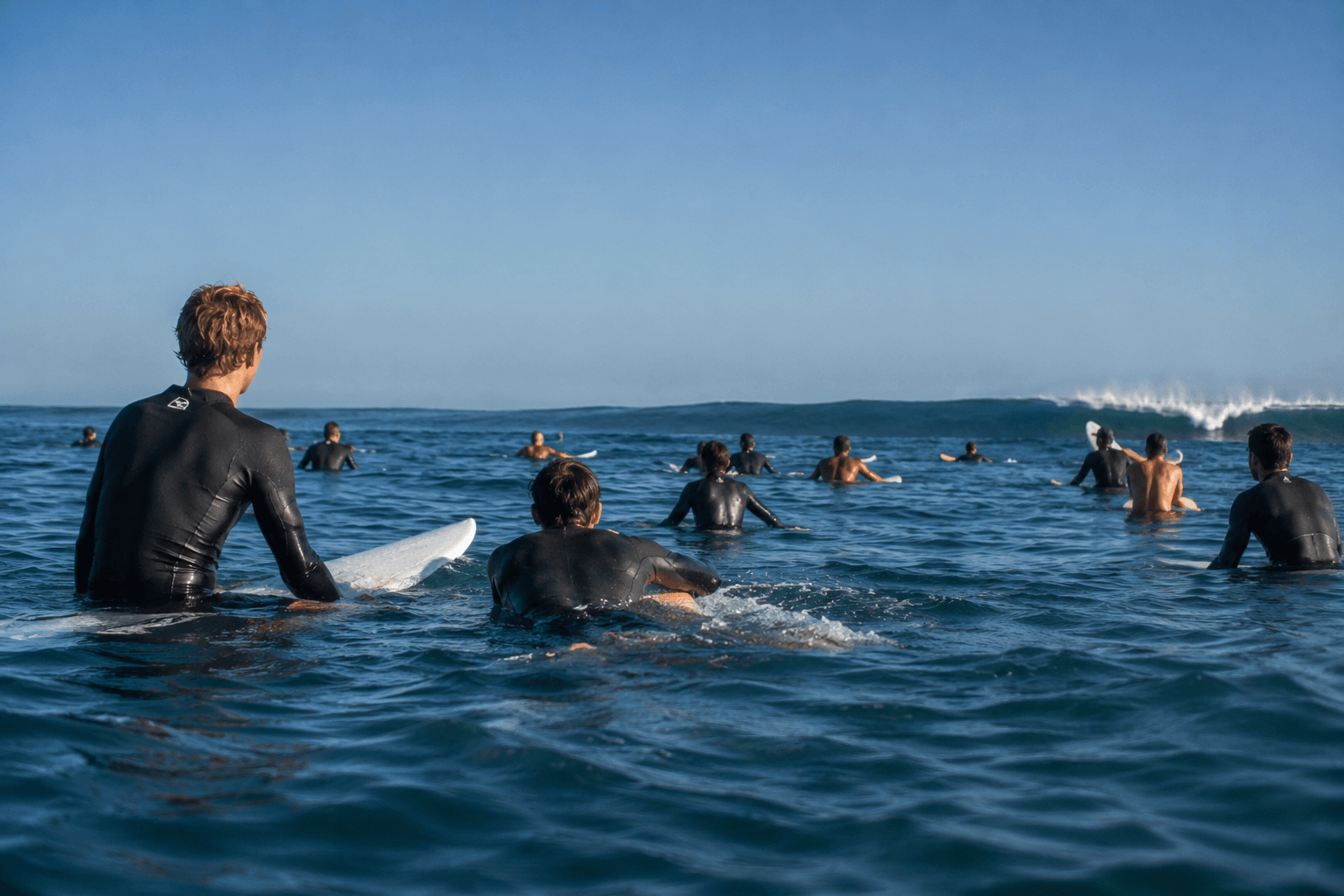
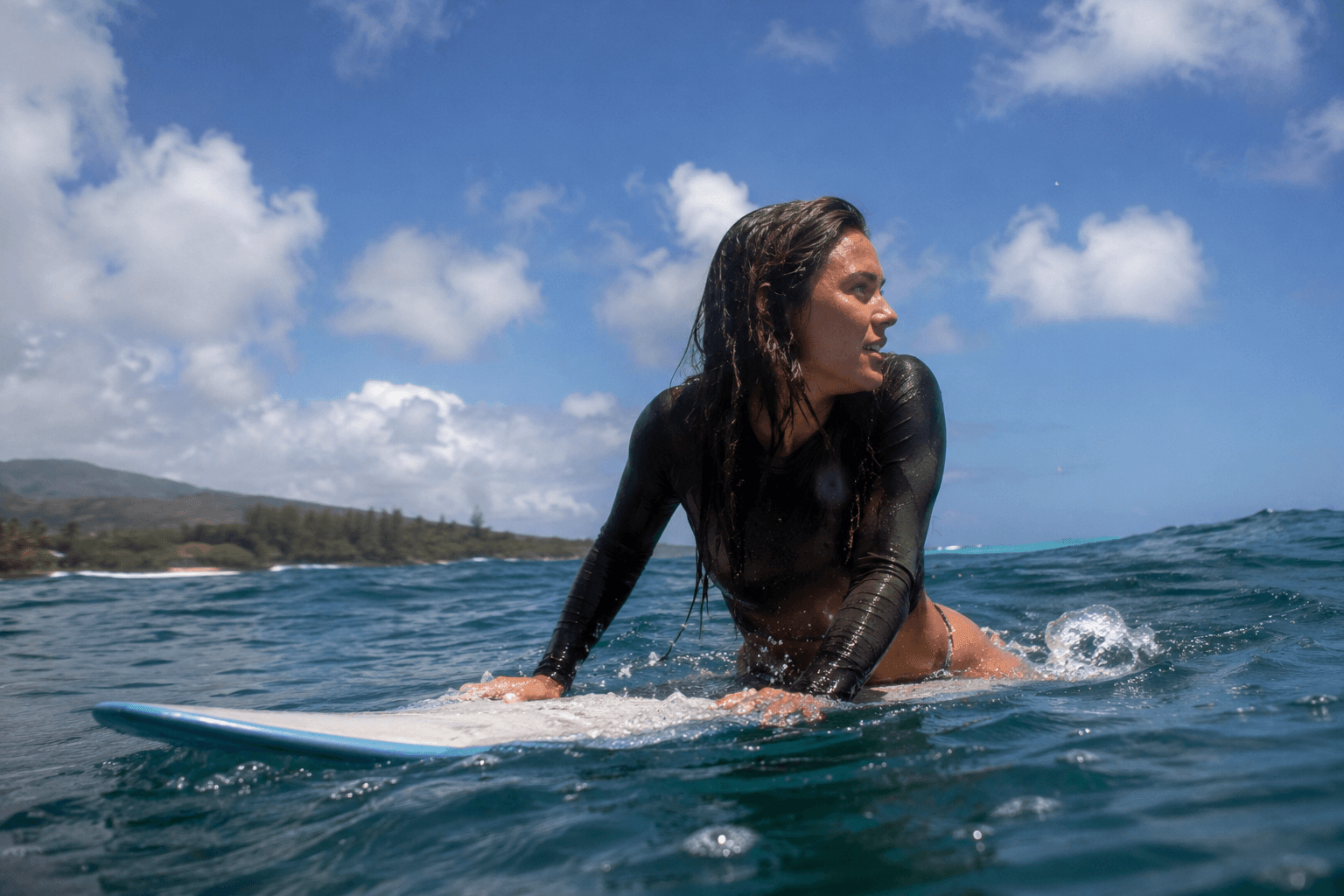
One of the biggest mistakes beginners make is looking down at the board while paddling. Instead, keep your eyes up and look toward the horizon. This helps you spot incoming waves, stay aware of other surfers, and paddle in a straighter line. The ocean is constantly changing, and you'll make much better decisions when you're looking ahead instead of down.
Soon you'll meet your first whitewater wave.
Your instructor will usually teach you to push your upper body up while staying on the board. This allows the whitewater to pass underneath your chest while your board punches through the wave instead of letting the wave hit you square in the body. Keep a firm grip on the rails and continue paddling once the wave has passed.
Another common mistake is stopping your paddle when you see a wave coming. It's completely natural to hesitate, but try not to. Keep paddling right up until the wave reaches you. The momentum you've built will help you get through the whitewater much more smoothly. If you stop paddling out of fear, the wave is much more likely to push you backward or knock you off your board.
You'll probably get knocked around a little.
Everyone does.
The important thing is to smile, climb back on your board, and keep paddling.
Catching Your First Wave
Once you're in position, your instructor will usually help push you into your first few waves.
When you feel the wave begin to lift the board, keep paddling until your instructor tells you it's time to stand.
Then commit.
Don't hesitate.
Look where you want to go—not down at your feet.
Keep your knees bent.
Stay relaxed.
You may only stand for a second.
You may ride all the way to the beach.
Either way, you'll probably come out of the water smiling.
Don't Compare Yourself
One of the easiest mistakes to make is comparing yourself to everyone else in your lesson.
Some people will stand up on their very first wave.
Others might spend the entire lesson trying.
Neither one matters.
Everyone learns at a different pace. Focus on your own progress and celebrate the small victories. Every successful pop-up, every extra paddle stroke, and every wave you catch is another step forward.
One Last Thought
Don't expect to leave your first lesson as a surfer.
Expect to leave as someone who has taken the very first step.
Surfing is one of those rare activities where there are no shortcuts. Every session teaches you something new. Every wave builds your confidence a little more.
One day you'll paddle out without thinking about where your hands go.
One day you'll pop up without even realizing it.
One day you'll catch a wave that you'll remember for the rest of your life.
But it all starts with that very first lesson.
If you fall in love with surfing, welcome to the journey.
It won't always be easy.
It probably won't always be pretty.
But I think you'll find it's one of the most rewarding things you'll ever do.
See you in the lineup.
— SSC Team


コメントを残す
このサイトはhCaptchaによって保護されており、hCaptchaプライバシーポリシーおよび利用規約が適用されます。