
Surfing and the Crowd in Hawaiʻi
I have been playing in the ocean around the Hawaiian Islands since I was born. I started bodyboarding as a little kid, began surfing as a teenager, and at 45 years old, I am still paddling out, taking surf trips, and planning parts of my life around the next swell.
Every winter, I still ride my 6'2" Wade Tokoro 4VC when the waves are running three to five feet Hawaiian, with occasional six-foot sets. Over the years, I have surfed the North Shore, South Shore, East Side, and West Side of Oʻahu. I have paddled out at Sunset, Pipeline, V-Land, Haleʻiwa, Mākaha, Yokohama, Maili Point, Tracks, Shark Country, Bowls, Tuna Bowls, Turtles, China Walls, and plenty of places in between. I have also surfed throughout Kauaʻi and Hawaiʻi Island.
These days, I usually stay closer to the East Side and North Shore because I live on the windward side of Oʻahu. But no matter where I travel, once people find out I am from Hawaiʻi and have surfed here most of my life, they tend to ask the same question:
What is it really like to surf in Hawaiʻi?
Most people asking that question are thinking about the crowd. They have heard stories about localism, packed lineups, shallow reefs, and waves that are much heavier than they appear online. Some of those stories are true, some are exaggerated, and some depend entirely on where and when you paddle out.
There is no single Hawaiʻi lineup.
Surfing Waikīkī on a small summer morning is completely different from paddling out at Sunset Beach during a solid winter swell. A mellow longboard wave in Town does not operate like a powerful North Shore reef break. Even the same spot can feel friendly and manageable one day and almost unrecognizable the next.
Before worrying about the crowd, you first need to understand the ocean you are entering. In Hawaiʻi, that begins with the reef.
The Reef Creates the Wave
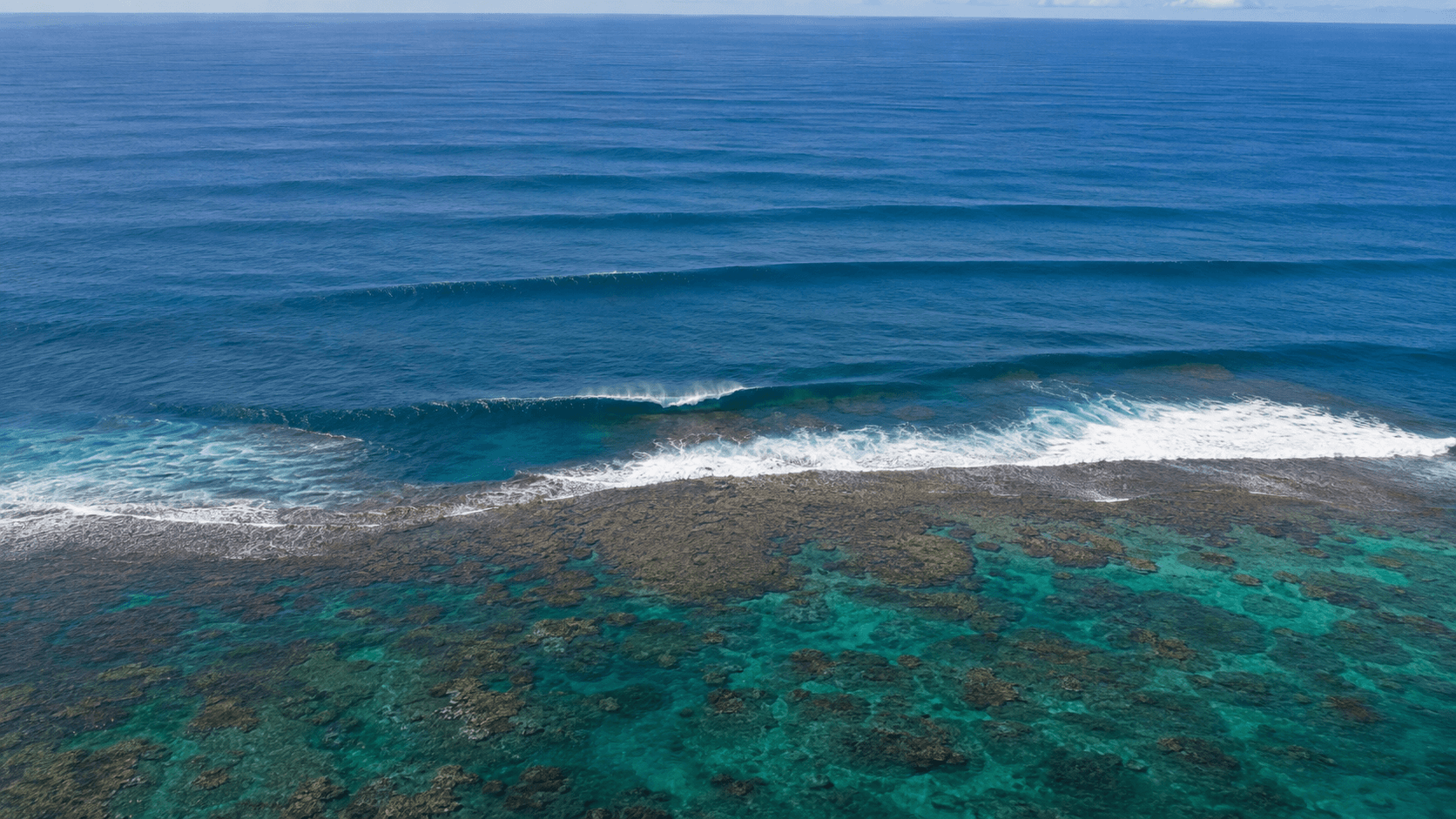
One of the main reasons surfing in Hawaiʻi is so good is because of our reefs.
Swells travel across thousands of miles of open ocean before reaching the islands. As that energy moves into shallow water, the shape and depth of the reef determine where the wave will stand up, where it will break, and how it will peel.
The reef takes raw Pacific energy and turns it into something we can ride. It creates the bowls, ledges, channels, peaks, and long walls that make Hawaiian waves famous.
That same reef can also be sharp, shallow, uneven, and unforgiving.
A lot of visiting surfers are afraid of the reef, and I understand why. But fear by itself is not particularly helpful. Respect is. The reef is the reason the wave exists, but it can hurt you when you become careless or stop paying attention to where you are.
If you surf in Hawaiʻi long enough, expect the reef to give you a friendly tap once in a while. That is just Hawaiʻi’s way of welcoming you.
The best way to deal with it is to remain aware of what is underneath you. Before entering the water, watch where other surfers paddle out and where they come back in. Look for the channel, exposed rocks, shallow sections, and places where people suddenly stop riding and kick out.
The tide matters too. A break that feels comfortable with more water over the reef may become much more serious as the tide drops. The wave may begin breaking harder, the inside may get shallower, and what looked like an easy exit earlier can become difficult.
If a section is too shallow for your ability or comfort level, don’t force it. Kick out before the wave reaches the shallowest part of the reef, or choose somewhere else to surf.
When you fall, protect your head and avoid diving headfirst. Don’t automatically put your feet down because you assume the water is deep. If you are unfamiliar with the spot, ask a lifeguard or an experienced surfer about the reef, current, channel, and safest entry and exit points.
Respecting the reef also means protecting it. Avoid deliberately standing or walking on living coral. Use an established channel, sandy patch, or known entry point whenever one is available.
If you do get cut, don’t ignore it. Clean the wound thoroughly. Reef cuts can become infected, and deep cuts or pieces of coral embedded in the skin should be treated by a medical professional.
You don’t need to be terrified of the reef. Learn where it is, understand what the tide is doing, and give it the respect it deserves. You may still receive that occasional friendly tap, but you will greatly reduce your chances of learning the hard way.
Conditions Can Change Quickly
Once you understand what is beneath you, the next thing to understand is what is coming toward you.
Hawaiʻi sits alone in the middle of the Pacific and receives swell from several directions. Winter storms in the North Pacific send powerful swells toward the northern and western shores. During summer, storms in the Southern Hemisphere send swell toward south-facing shores. The windward sides of the islands also receive trade-wind swell throughout much of the year.
This exposure is what gives Hawaiʻi such consistent surf, but it also means conditions can change quickly.
A break may look manageable when you paddle out, then become significantly larger as a new swell fills in. A longer-period swell can arrive with more power, move more water across the reef, and break farther outside than the waves you were watching earlier.
You may paddle out during what appears to be a quiet period without realizing that you have not yet seen a proper set.
That is why watching the ocean before paddling out matters so much. Don’t watch two waves, decide it looks good, and immediately jump in. Give yourself enough time to see several complete sets. Watch where the largest waves break, how much the lineup moves, where the current takes people, and what happens to surfers who get caught inside.
The surf forecast and buoy readings are valuable, but they do not replace your own eyes. Swell direction, period, tide, wind, and the shape of the reef all influence what eventually breaks at a particular spot.
Visitors should also understand that wave heights are often described differently in Hawaiʻi. Traditionally, local surf reports have measured something closer to the back of the breaking wave rather than the full face. That means a three-to-five-foot Hawaiian forecast can produce wave faces far larger than a visiting surfer might expect.
When I say I ride my 6'2" Tokoro in three-to-five-foot Hawaiian surf with occasional six-foot sets, I am not describing waist-to-head-high waves. Once the surf reaches that range at a serious reef break, there is real power moving through the lineup.
There is no shame in recognizing that the conditions are beyond your ability. Choosing a smaller break, waiting for the swell to settle, or surfing another day is not weakness. It is good judgment.
The ocean will still be there tomorrow.
Then There Is the Crowd
If you have chosen the right break, studied the reef, and honestly assessed the conditions, you are finally ready to deal with the part everyone asks about: the crowd.
At many Hawaiʻi breaks, especially the better-known and more advanced ones, the lineup already has an established rhythm before you arrive. People have been waiting. Many of them know one another. Some have surfed that break for decades and understand every shift in the peak.
You cannot simply paddle to the deepest position, sit inside everyone, and expect to start catching the best waves.
When an unfamiliar surfer paddles out, people notice. They may not say anything, but they are watching how that person behaves.
Can you control your board? Do you understand who has priority? Do you look before paddling for a wave? Do you repeatedly paddle around people who have been waiting? Can you handle yourself when a larger set arrives, or does everyone else suddenly have to avoid or rescue you?
Ability matters, but behavior matters just as much.
You do not need to paddle out and prove yourself immediately. In fact, trying too hard to prove yourself often creates the opposite impression. Start a little wider, take a moment to understand how the peak is working, and wait for an opportunity that naturally comes to you.
Some Hawaiʻi lineups operate through a clear rotation. Others are more competitive. At certain waves, the surfer closest to the peak generally has priority, but that does not mean you can paddle around everyone at the last second and claim the inside position. Technically gaining priority by back-paddling someone is still going to be seen for what it is.
Patience gives you time to understand the lineup, and it gives the lineup time to understand you.
Maybe someone calls you into a wave. Maybe the crowd shifts and leaves you in position. Maybe you wait until the right wave comes directly to you. When that opportunity arrives, commit to it. Hesitating halfway through the takeoff or repeatedly pulling back can be just as frustrating as being overly aggressive.
If you demonstrate patience, awareness, and ability, you will usually find opportunities. But if you paddle directly to the best position and compete for every wave, you may spend the entire session catching nothing. You may also create tension that could have been avoided.
Hawaiʻi lineups are not automatically hostile to visitors. Most problems begin when someone paddles out with more confidence than awareness—or when their ability does not match the wave they have chosen.
A respectful and capable visiting surfer is usually recognized as exactly that.
Respect Is Something People See
Surfing in Hawaiʻi can be one of the best experiences of your life. The water is warm, the waves are powerful, and the reefs create shapes that surfers travel from around the world to experience.
But Hawaiʻi is not a controlled surf park. The reef is real. Conditions can change quickly. The crowd may include people who have spent their entire lives learning that particular wave.
Come prepared. Watch the ocean before paddling out. Be honest about your ability. Learn how the lineup works before trying to become part of it.
You do not need to arrive afraid, and you do not need to arrive trying to prove that you belong.
Respect in a Hawaiʻi lineup is not something you announce or demand. It is something people see in the way you enter the water, wait your turn, handle yourself, and treat everyone around you.
Respect the reef. Respect the conditions. Respect the people already in the water.
If you can do those things, you don’t need to be afraid of surfing in Hawaiʻi. You only need to understand where you are.
Daniel Sole
Founder, Sole Surf Company
Editorial Note: This article was written by Daniel Sole and is based on his personal experiences, knowledge, and opinions. AI assisted with editing, organization, grammar, and clarity. The final article was reviewed and approved by Daniel Sole.
Image Note: The featured image was generated using AI.


Leave a comment
This site is protected by hCaptcha and the hCaptcha Privacy Policy and Terms of Service apply.